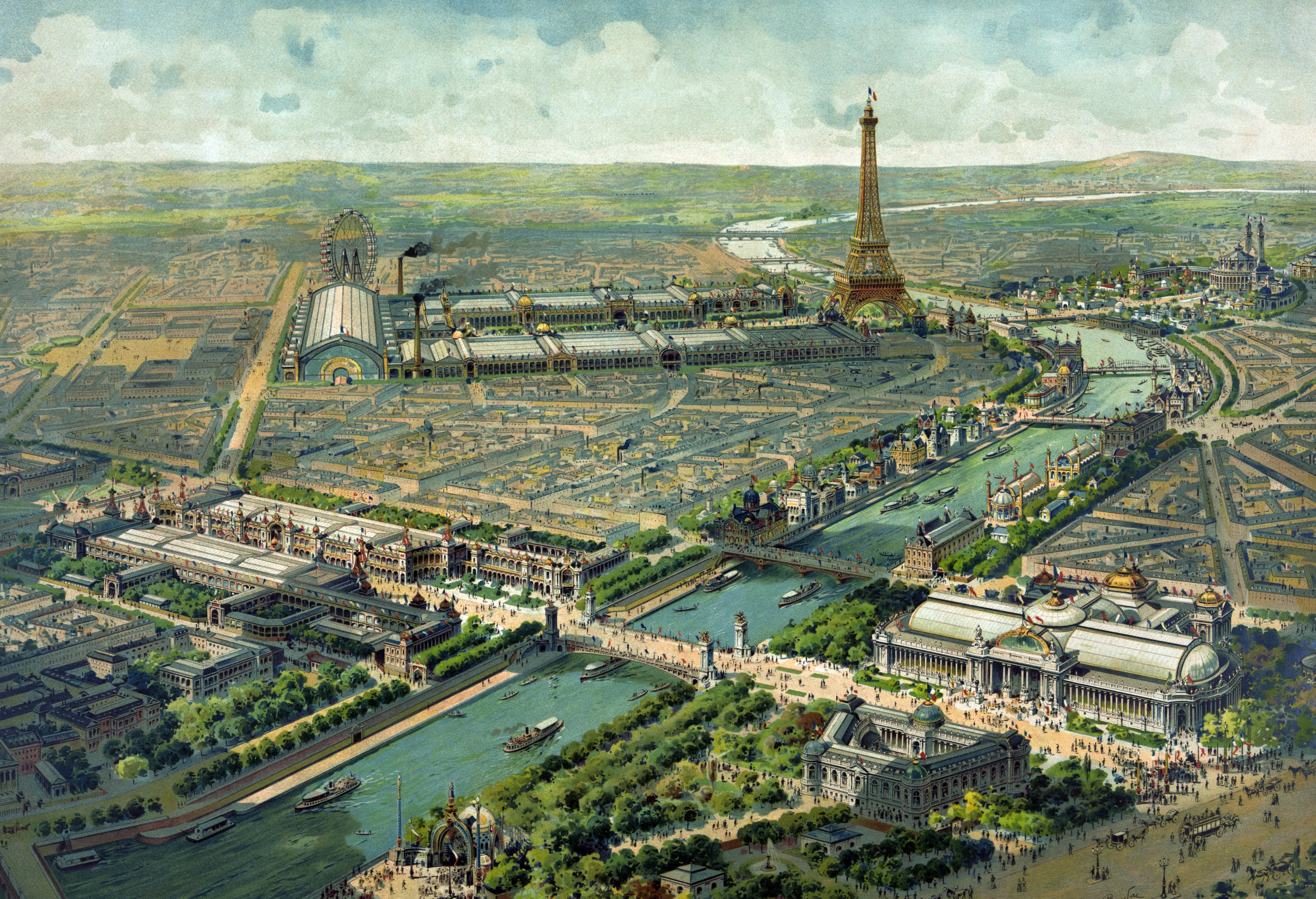
Vue panoramique de l'Exposition universelle de 1900, Lucien BaylacParis · France1900Exposition
Universelle
Entrée
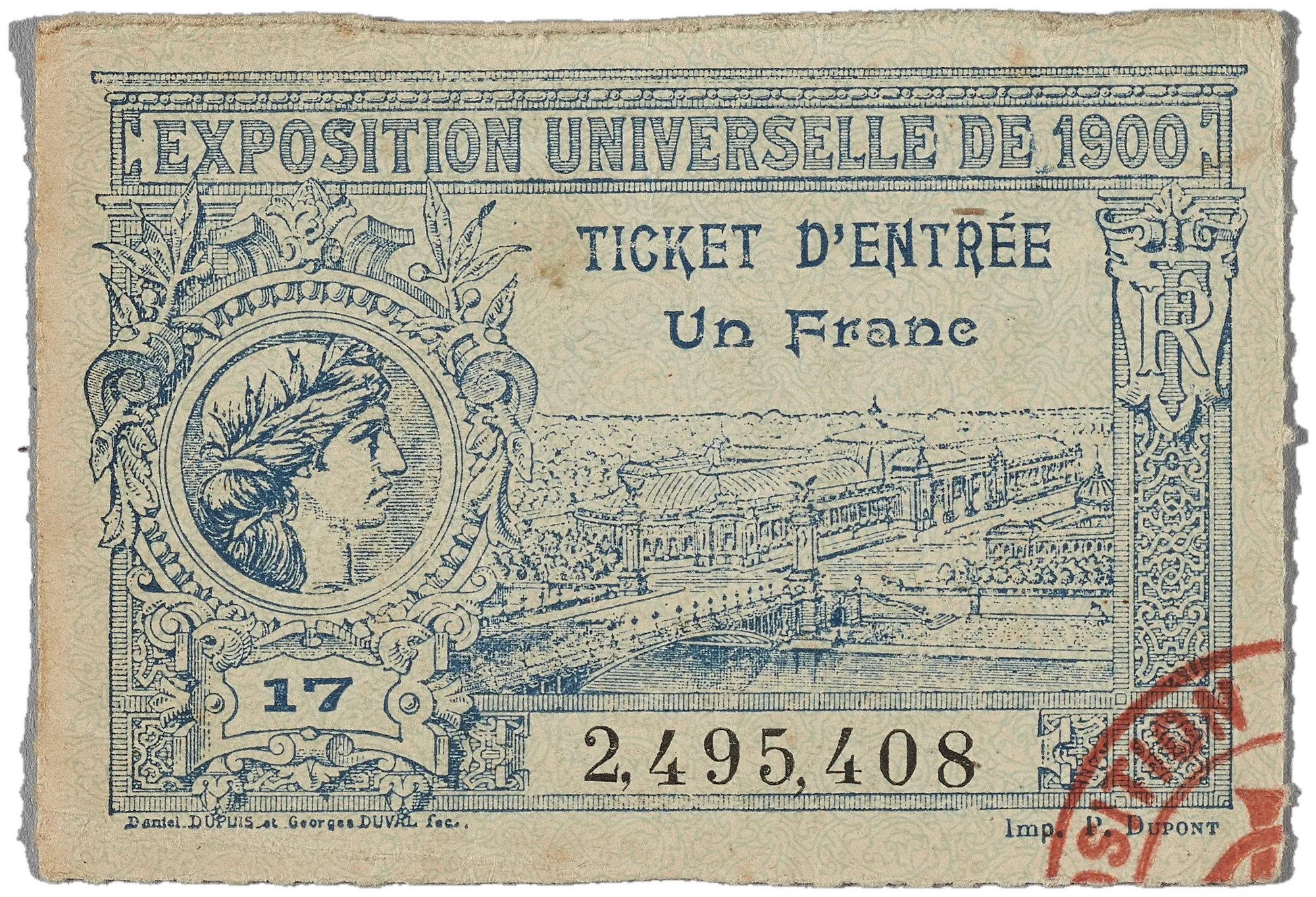
Exposition Universelle de 1900, ticket d'entrée, un franc, no 2,495,408
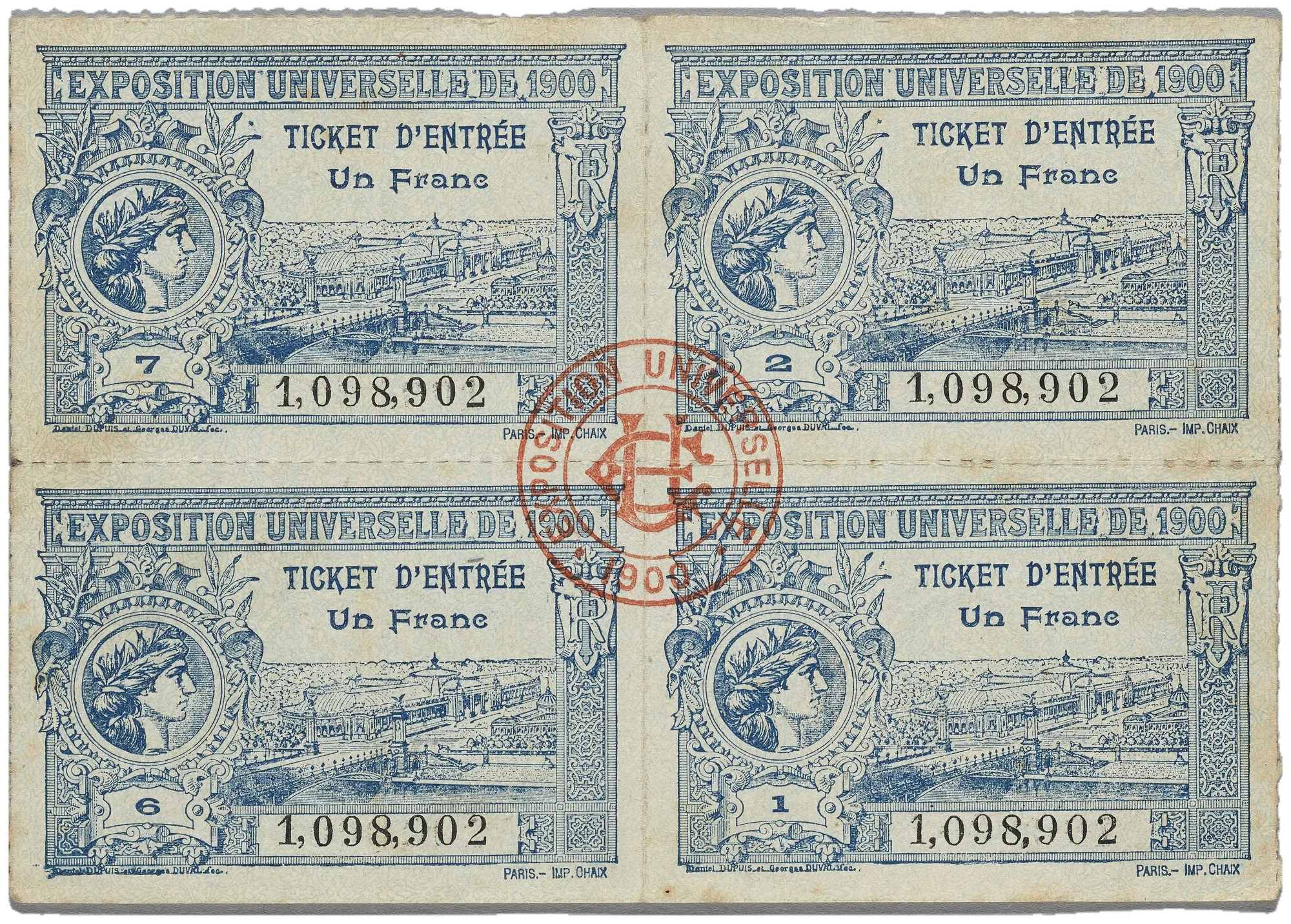
Exposition Universelle de 1900, an uncut block of four tickets d'entrée, no 1,098,902
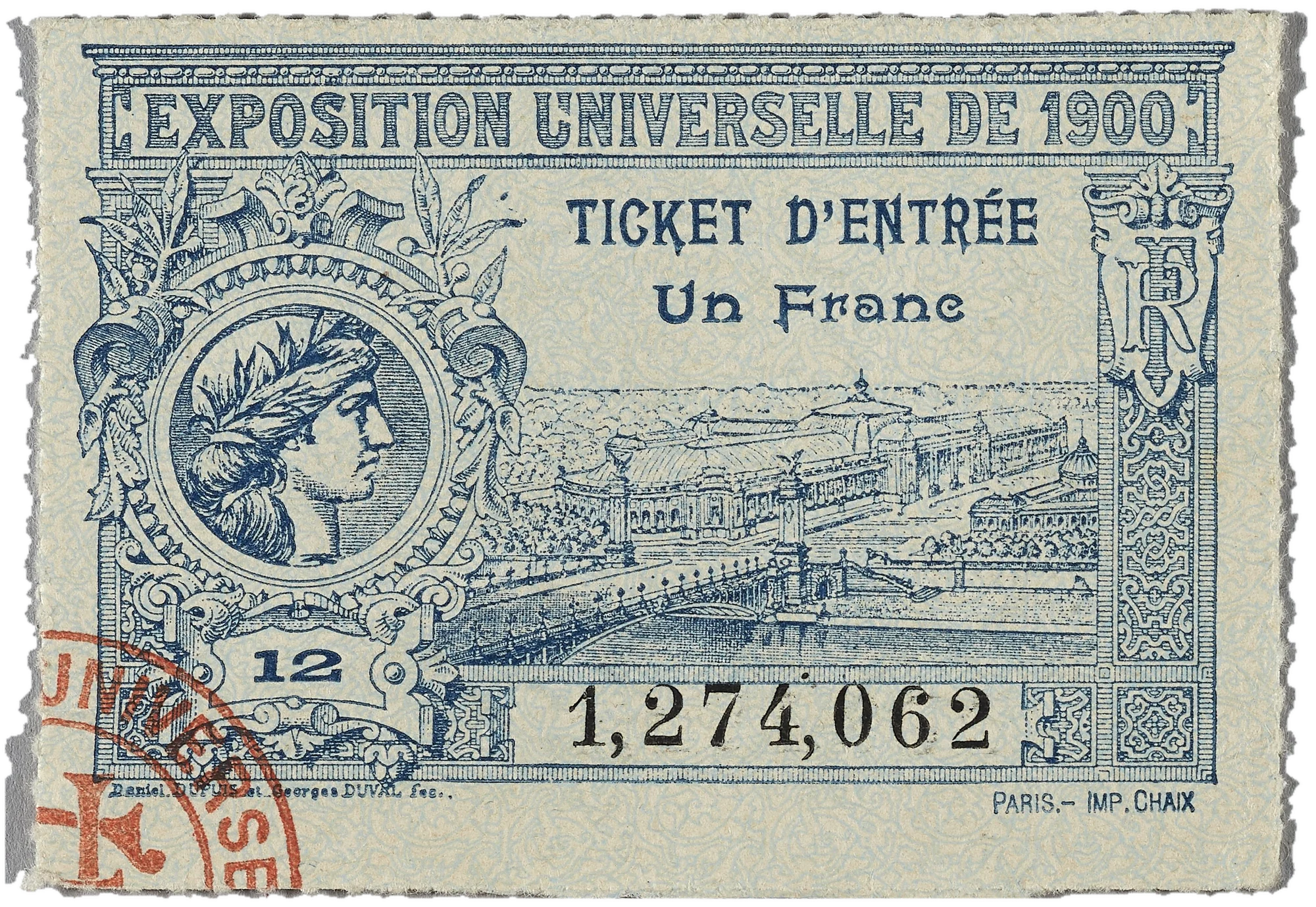
Exposition Universelle de 1900, ticket d'entrée, un franc, no 1,274,062

The Exposition Universelle of 1900 brought the achievements of the nineteenth century into a compelling vision of the modern world. With more than fifty million admissions, Paris became an international showcase for scientific discovery, industrial innovation, and artistic ambition. The opening of the Paris Métro, the construction of the Grand Palais and Petit Palais, and the spectacular Palais de l’Électricité demonstrated how technology and architecture were transforming urban life. Electricity, in particular, symbolized a new era of human possibility, reshaping industry, transportation, communication, and the experience of the modern city.

Across the exposition, emerging technologies anticipated many features of twentieth-century civilization. Moving sidewalks, mechanical escalators, advances in electric and hybrid vehicles, wireless communication, and new forms of cinema revealed a world becoming increasingly mobile and interconnected. These innovations represented more than mechanical ingenuity; they signaled fundamental changes in how people traveled, communicated, worked, and experienced their surroundings. Paris offered a remarkable glimpse of technological progress becoming an integral part of everyday life.

The optimism of Paris 1900 also revealed the contradictions of modern progress. The scientific and industrial achievements celebrated as instruments of prosperity would soon contribute to the destructive capabilities of the First World War. At the same time, rapid modernization challenged established artistic traditions and transformed cultural expression. The exposition marked both the culmination of nineteenth-century achievement and the beginning of a new era, raising an enduring question: whether humanity's moral and cultural development could keep pace with its extraordinary capacity for invention.
Paris 1900:
Illuminating the Modern World

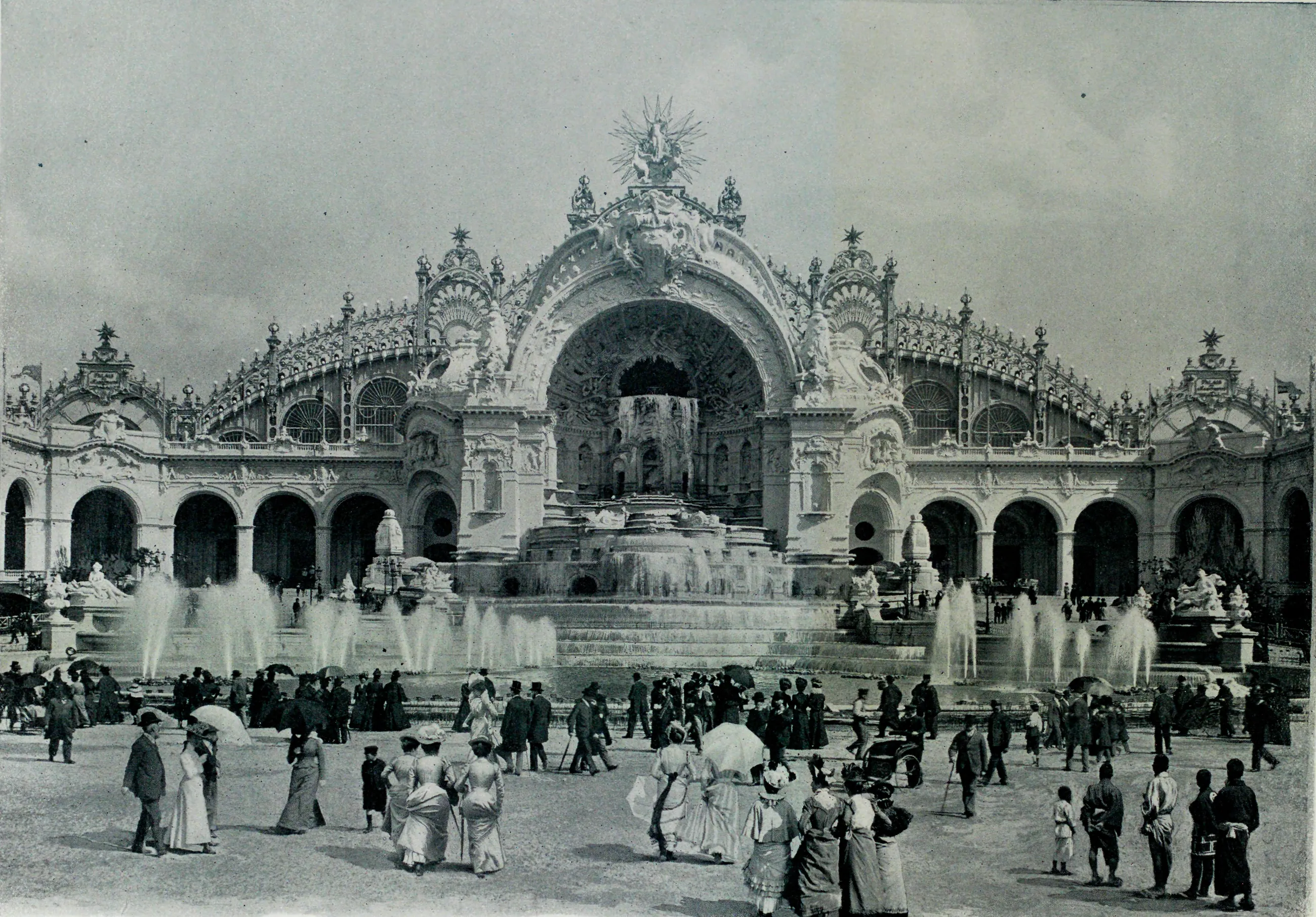
Le Palais de l'Électricité et le Château d'Eau

Electricity: Illuminating a New Century

At the heart of the Exposition Universelle of 1900, the monumental Palais de l’Électricité embodied the extraordinary convergence of engineering, architectural imagination, and technological ambition. Stretching approximately 420 metres across the Champ de Mars, its vast generating installations demonstrated the unprecedented scale of electrical power at the dawn of the twentieth century. What had once been an experimental achievement was emerging as a transformative force in industry, transportation, and urban life.

The palace became a magnificent theatre of light. Thousands of incandescent lamps illuminated its elaborate façade, while the adjacent Château d’Eau united cascading water and changing colors in a spectacle of remarkable precision and artistry. Beyond the exhibition grounds, the illuminated Eiffel Tower extended this vision across the Parisian skyline. Yet the true achievement lay beyond the spectacle: the ability to harness scientific ingenuity and engineering excellence to reshape the human environment. Paris 1900 transformed electricity into a defining expression of modern civilization, illuminating not simply a city, but the possibilities of a new century.

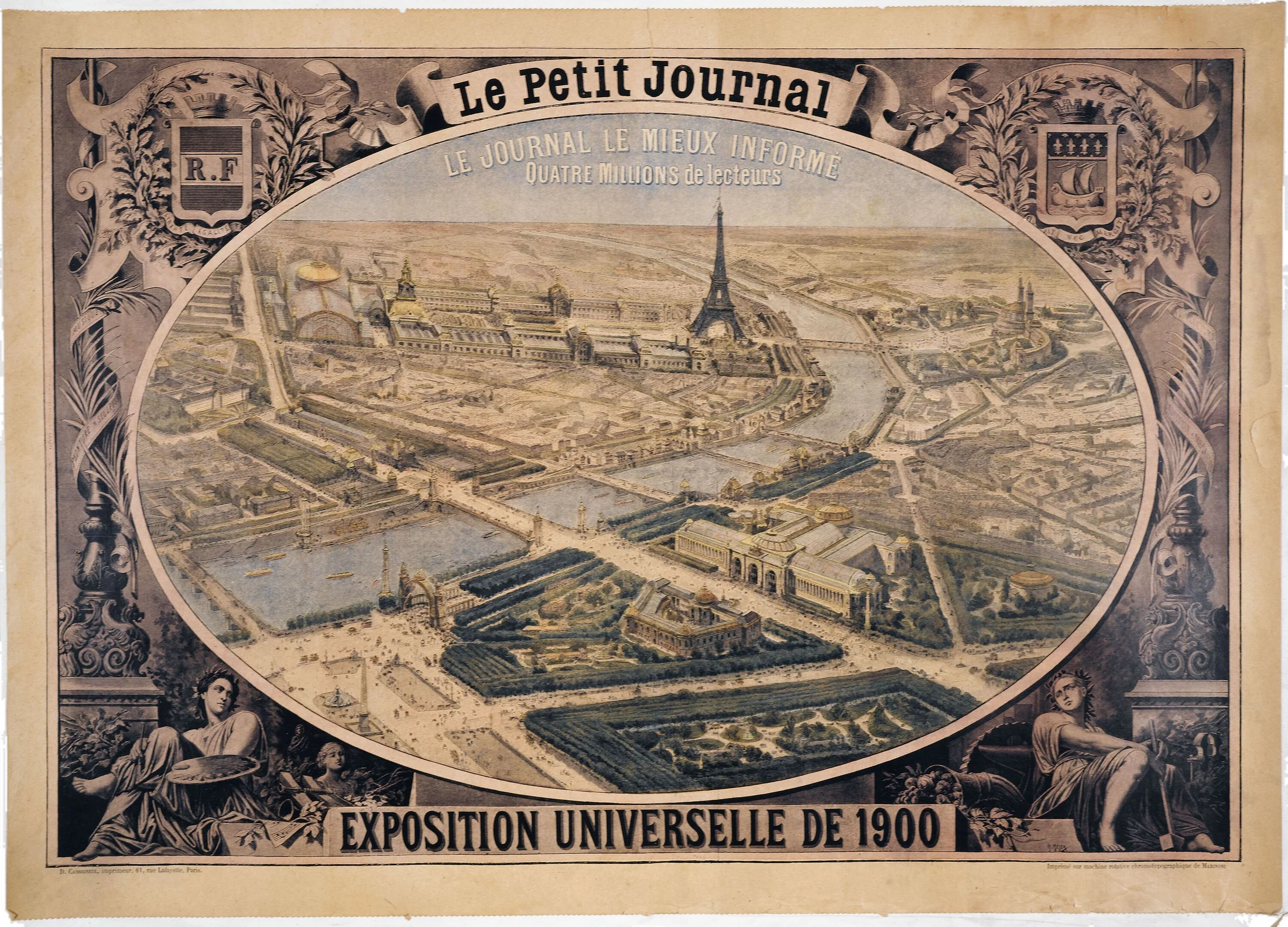
Le Petit Journal, Exposition Universelle de 1900

Cinema, Media, and Communication

The Exposition Universelle of 1900 revealed a new era in humanity's ability to capture, communicate, and experience the world. The Lumière brothers' monumental film projections in the Galerie des Machines demonstrated cinema's emerging artistic and cultural possibilities, while the Cinéorama explored immersive panoramic imagery. The Phono-Cinéma-Théâtre experimented with synchronizing recorded sound and moving pictures, anticipating the development of sound cinema. The exhibition of the telegraphone, an early magnetic sound-recording device, further demonstrated how technology was transforming the preservation and reproduction of human experience.

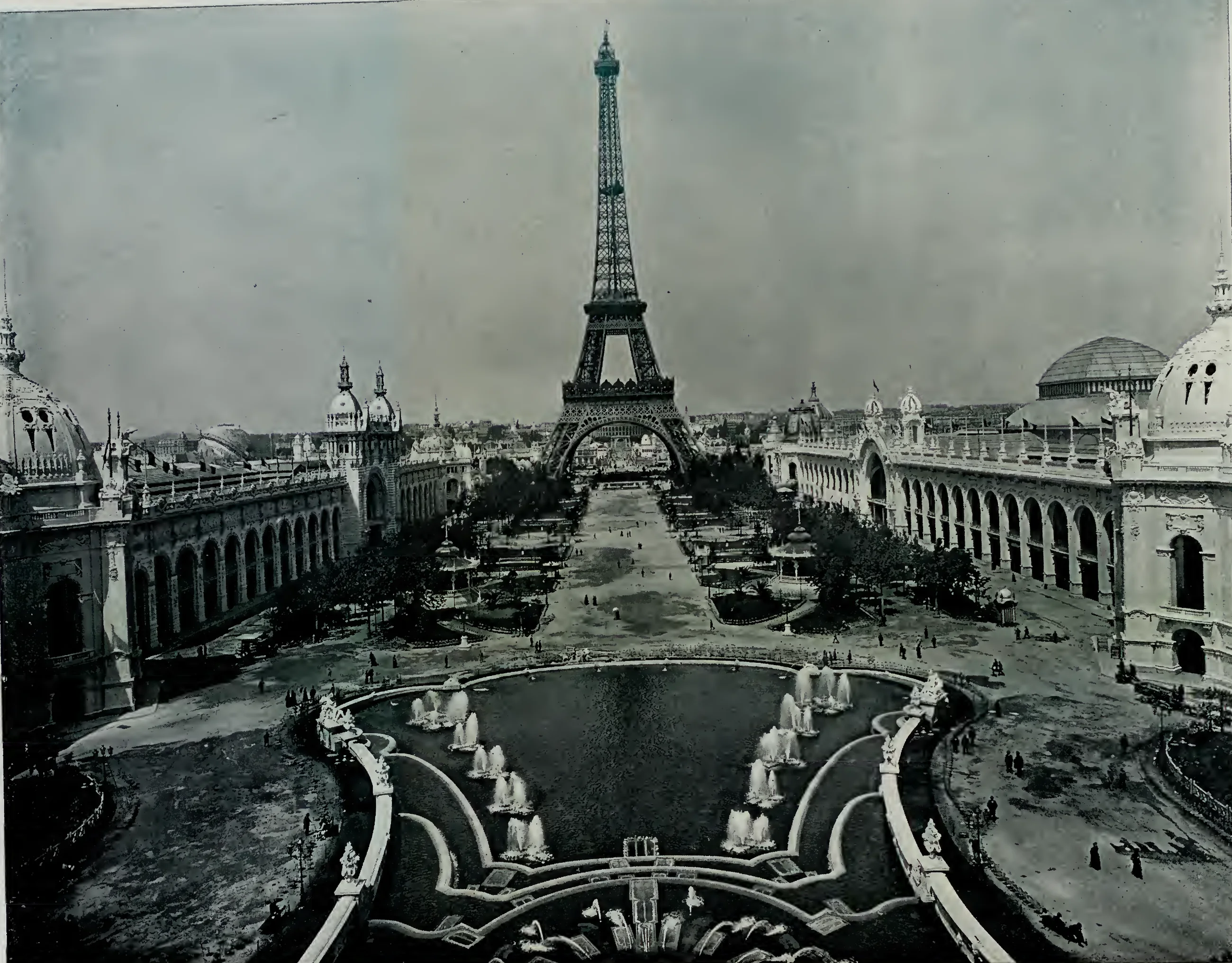
Le Champ-de-Mars, vue prise du Château d'Eau

Equally significant were advances in wireless communication. Édouard Branly's pioneering research into electromagnetic waves and radio-wave detection helped establish the scientific foundations of wireless telegraphy. Together, these developments anticipated a world in which images, sound, and information could transcend geographical boundaries, fundamentally transforming communication, entertainment, and the international exchange of ideas.

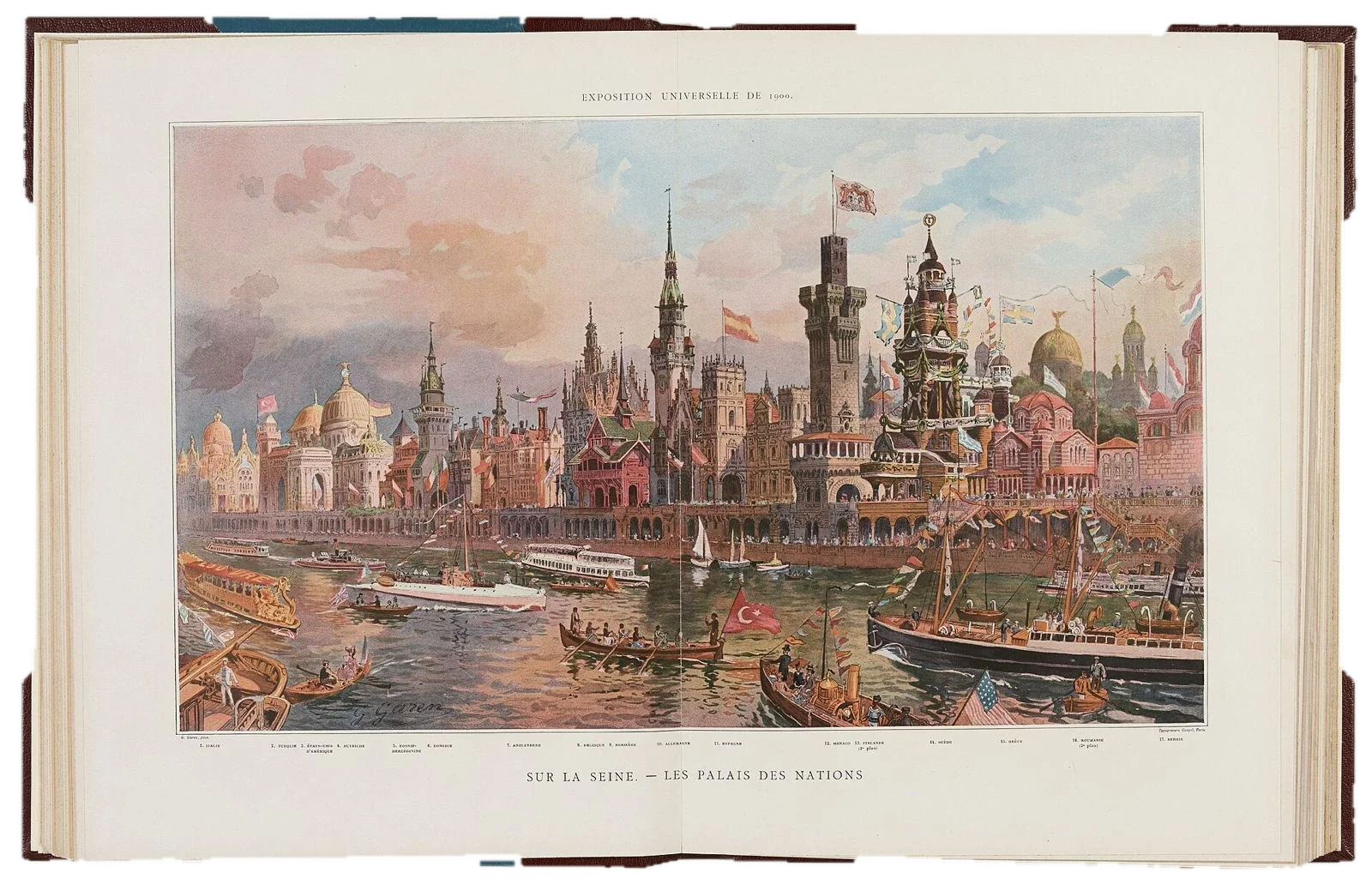
Sur la Seine - Les palais des nations, G. Garen, the open book